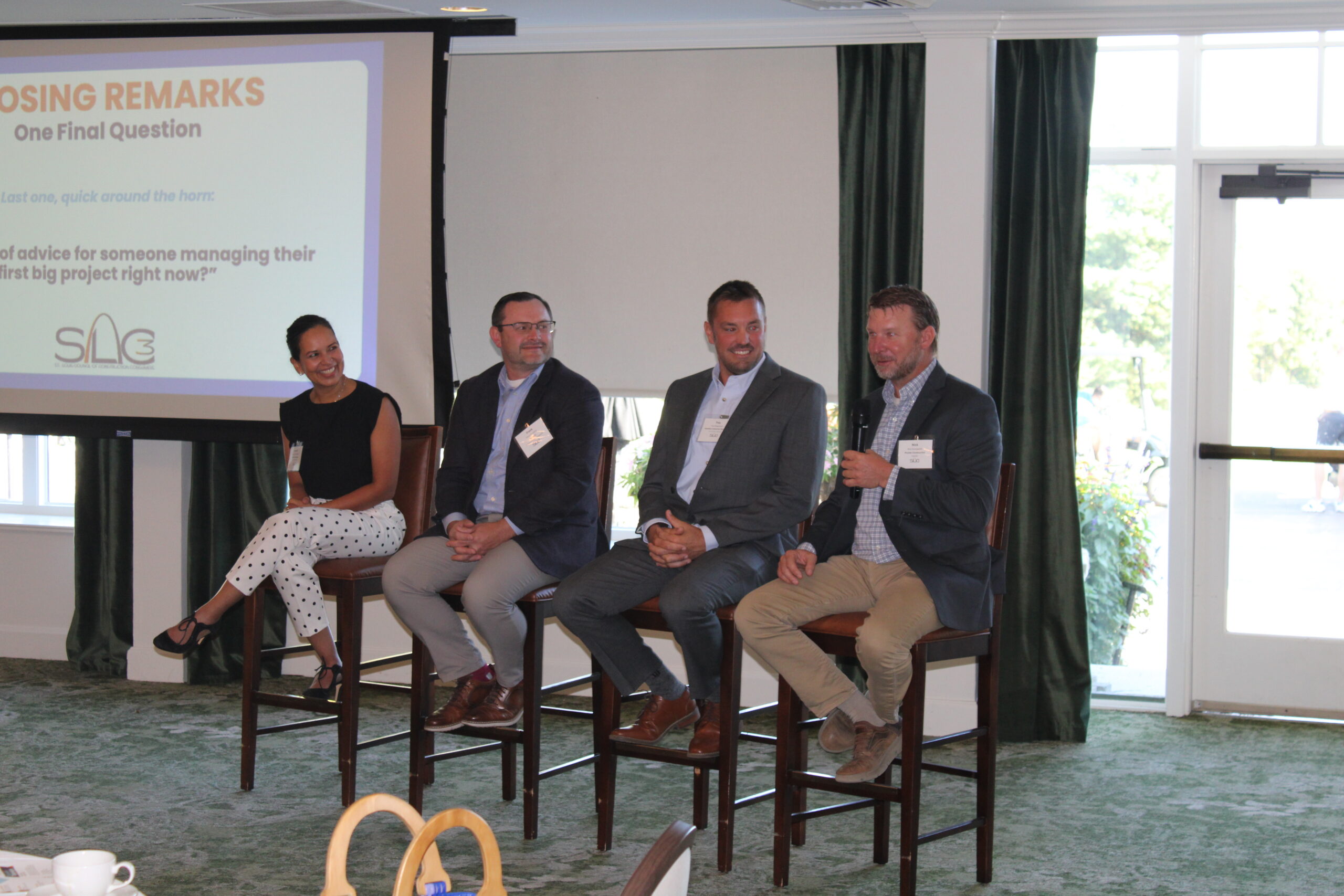
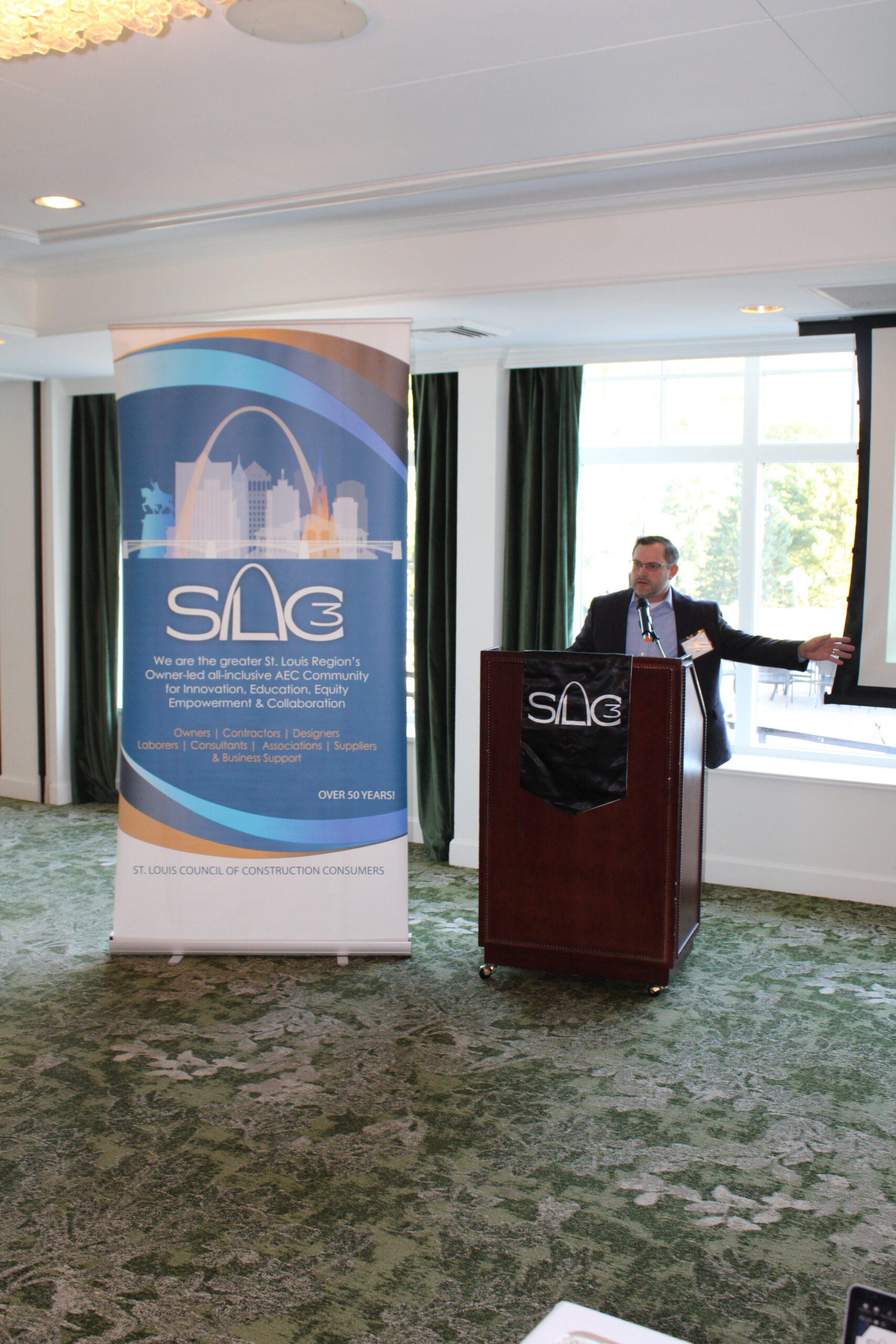

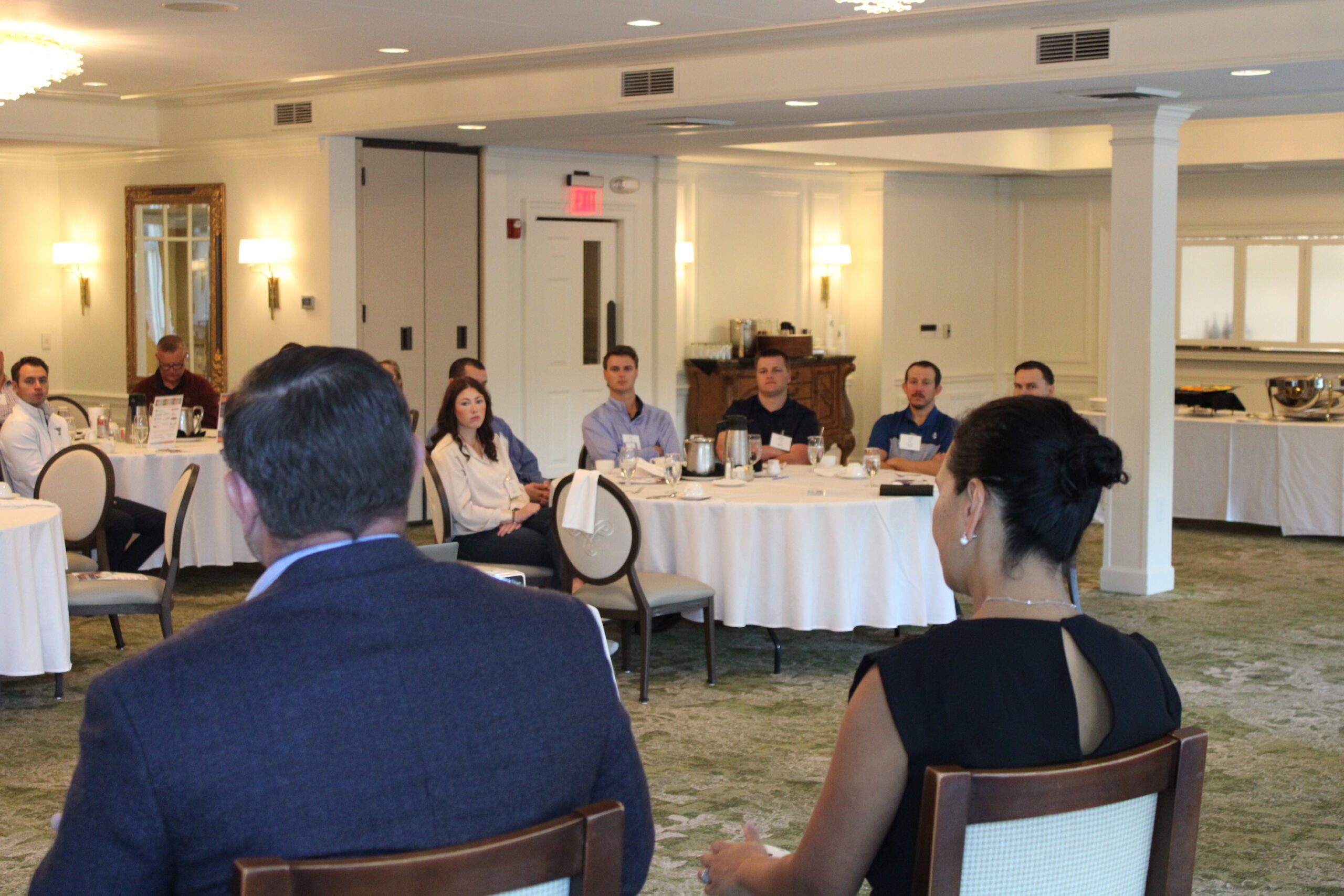


On October 8, SLC3 brought the architecture, engineering, and construction community together at Greenbriar Hills Country Club for BUILD Series: Build to Adapt, a training and education program focused on navigating the challenges that arise when project plans change.
The discussion brought together professionals whose different responsibilities offered a broad perspective on project adaptability, from the owner’s priorities to the coordination and decisions required across project teams.
Moderated by Rick DiFani, Vice President of LUZCO Technologies, the panel featured:
- Lusnail Haberberger, Founder and President, LUZCO Technologies
- Frank Niemerg, Director of Project Management, Ameren
- Trey Wiegmann, Vice President of Construction Services, Poettker Industrial Services
- Nick Kampwerth, Engineer, Plocher Construction
Even the best project plans encounter changes. What matters is how teams recognize challenges, communicate their impact, and respond together.
SLC3’s Built to Adapt: Real-World Leadership for Projects That Don’t Go According to Plan brought owner, engineering, and construction perspectives together for a practical discussion about keeping projects moving. The conversation reinforced that adaptability begins well before a problem occurs—with thoughtful planning, clear responsibilities, and the trust to speak openly.
Here are six takeaways to bring back to your team.
1. Make the schedule a shared planning tool.
A schedule needs to do more than establish a baseline. It should help everyone understand current conditions, critical activities, dependencies, and the decisions required to maintain progress.
Diligent review of the critical path helps teams assess how changes affect the entire project. Owners need clarity from contractors, and contractors need timely input from owners and other stakeholders. Breaking activities into meaningful detail—including submittals, procurement, and approvals—helps expose potential delays earlier.
Put it into practice: Review what has changed, what is at risk, and who needs to act at each schedule meeting.
2. Plan for what could go wrong before it does.
Supplier delays, space constraints, and execution challenges can quickly reduce the time available to respond. Discussing those risks early gives teams more options.
Contingency planning should establish more than a backup idea. Teams need to understand what would trigger a change in approach, who can authorize it, and how the response would affect other work.
Put it into practice: For major risks, ask: “If this happens, what will we do—and who makes that decision?”
3. Communicate problems while there is still time to respond.
Teams cannot address problems they do not know about. Concerns should surface promptly, and changes should reach every stakeholder whose work or decisions may be affected.
That requires an environment where people feel comfortable raising an issue without fear of blame. Trust makes early communication possible; clear accountability turns that communication into action.
Put it into practice: Establish a clear process for reporting issues, identifying affected parties, and assigning follow-up.
4. Give people the authority to keep work moving.
Unclear decision-making creates roadblocks. Project teams need to know who owns each decision, when it is needed, and when escalation is appropriate.
Equipping managers closest to the work to make decisions within defined limits can prevent unnecessary delays. Speed still requires judgment: rushing without enough information can create rework.
Put it into practice: Identify recurring approval bottlenecks and clarify which decisions can be made at the project level.
5. Choose tools that create visibility—and train people to use them.
Dashboards and consolidated information can make project status easier to understand. AI may offer additional ways to organize information and identify issues, but useful results depend on reliable inputs and informed review.
Software only helps when people understand it and use it consistently. Training, shared expectations, and clear ownership of updates are essential.
Put it into practice: Agree on where current project information lives, who maintains it, and how the team will use it.
6. Build accountability around clarity.
Team buy-in requires a shared understanding of responsibilities, commitments, and consequences. Everyone should know what they owe the project—and how their work affects others.
Across the discussion, one word kept returning: clarity. Clear schedules. Clear communication. Clear decision authority. Clear expectations.
Put it into practice: Close meetings by confirming each action, its owner, and its deadline.
Thank you to panelists Lusnail Haberberger, LUZCO Technologies; Frank Niemerg, Ameren; Trey Wiegmann, Poettker Industrial Services; and Nick Kampwerth, Plocher Construction, and moderator Rick Difani, LUZCO Technologies, for sharing their perspectives and practical experience.