Strengthening Safety Through Care, Stewardship, and Support by Chuck Twellmann
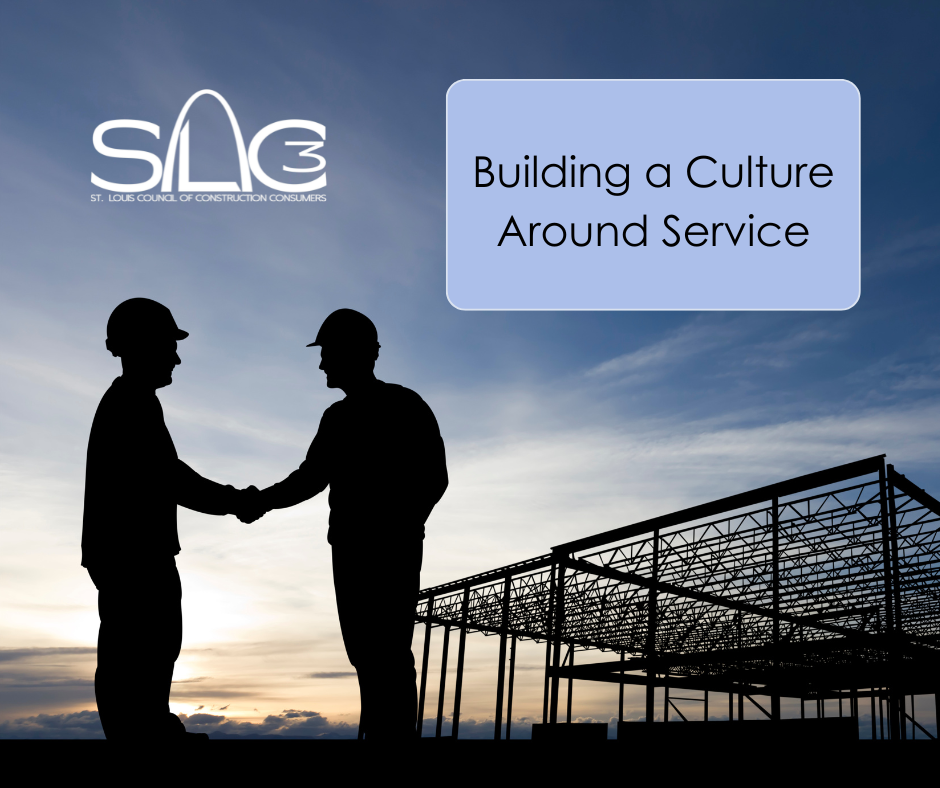
In a leadership meeting earlier this year, our company president introduced Quint Studer’s Nine Principles for Organizational Excellence and invited leaders across the organization to reflect on how these ideas show up in our daily work. That conversation inspired this ongoing blog series exploring how each principle shapes and strengthens our construction safety culture across a wide range of industries. After discussing Commit to Excellence and Measure the Important Things, we now turn to Principle 3: Build a Culture Around Service.
Across construction, engineering, fabrication, maintenance, utilities, and infrastructure, a service-driven culture is foundational to both organizational excellence and safety. Service is not limited to external customers. It includes how we support our crews, partner with subcontractors, steward clients’ assets, and show up for one another in shops, plants, job sites, and project offices.
When safety becomes an act of service, not enforcement, trust grows, communication strengthens, and performance improves.
Service to Workers: Safety as Support, Not Surveillance
A culture around service begins with leaders viewing safety as a way of serving the workforce. Workers across industries (ironworkers, operators, millwrights, electricians, pipefitters, carpenters, manufacturing technicians) face complex risks every day. Serving them means removing obstacles, listening to their concerns, and aligning leadership decisions with the realities of field and shop work.
Research shows that when employees feel supported and valued, their willingness to follow safe work practices increases significantly. Li et al. (2023) found that safety-specific leader support strongly predicts both compliance and participation, particularly when employees believe their leaders genuinely care about their well-being.
Service-oriented leadership is visible in the small things:
• Taking time to understand working conditions
• Asking workers what they need rather than assuming
• Following up on concerns raised during job briefings
• Coaching before correcting
• Solving barriers quickly instead of letting them linger
These actions reinforce that safety is not about catching mistakes, it’s about supporting people. A service mindset transforms safety from a requirement into a shared responsibility.
Service to the Mission and Community: Safety as Stewardship
Every construction or industrial project impacts more than the jobsite. We serve communities, customers, building occupants, drivers passing through work zones, and the environment around us. Whether it’s replacing aging infrastructure, building new facilities, modernizing plants, or supporting manufacturing operations, our work affects real people.
Building a culture around service means understanding that every safety decision reflects stewardship—of public trust, client expectations, environmental responsibility, and community well-being.
Research supports this connection. Ahmed et al. (2021) found that internal service values—treating people with care, respect, and responsiveness; strengthen communication and accountability, ultimately improving safety outcomes in infrastructure and large capital projects.
Service shows up when organizations:
• Maintain orderly, predictable work zones
• Minimize disruptions to neighbors or facility operations
• Protect the public with robust barricades and signage
• Coordinate transparently with stakeholders
• Respect property, equipment, and community resources
Service-driven safety extends far beyond compliance; it is stewardship of people, property, and the broader mission.
Service to One Another: The Crew-Level Culture That Drives Safety
While leadership and organizational purpose matter, the deepest expression of service happens within the crew. In every discipline and industry, the strongest teams are those where teammates look out for one another, speak up early, and intervene out of genuine care.
Research reinforces this: peer-to-peer communication and mutual aid significantly reduce unsafe actions on jobsites (Park & Kim, 2022). When workers normalize speaking up, and when feedback is received with respect, risk decreases and trust increases.
Service-driven teams demonstrate care through:
• A gentle reminder about PPE
• A quiet nudge to stop and reassess a plan
• Asking, “Need a hand with that?”
• Inviting new workers into planning conversations
• Checking on someone who seems distracted or rushed
These small moments reflect service. They build the kind of environment where safety becomes part of the team identity, not just a project requirement.
What Research Says About Service and Safety Culture
Across industries, a service-oriented culture produces measurably stronger safety outcomes. Recent studies highlight:
• Leader support and psychological safety increase hazard reporting, speaking up, and safety participation (Li et al., 2023).
• Internal service values improve safety performance by strengthening communication and reducing conflict (Ahmed et al., 2021).
• Peer service and mutual aid significantly reduce unsafe acts on construction and industrial sites (Park & Kim, 2022).
• Service-centered leadership enhances workers’ sense of belonging and engagement, lowering incident potential (Marín et al., 2020).
Whether on a commercial jobsite, industrial turnaround, transmission corridor, manufacturing floor, or fabrication shop; the pattern is the same: organizations that build cultures around service become safer organizations.
Practical Ways to Build a Culture Around Service
Here are concrete actions organizations across industries can use to strengthen service-driven safety culture:
1. Serve Your Crew First: Start the day with: “What do you need from me to do this job safely today?”
2. Normalize Speaking Up: Reframe intervention as care, not correction.
3. Remove Barriers Quickly: Service means acting fast on safety concerns, equipment issues, and field needs.
4. Connect Safety to the Bigger Mission: Help teams see how their safe work protects customers, communities, and the company’s reputation.
5. Include Everyone in Planning: Service means ensuring every voice—from new hires to seasoned foremen—is heard.
6. Lead by Presence: A service-minded leader is visible, available, and engaged in the work, not distant from it.
7. Treat Every Interaction with Respect: Courtesy, honesty, and humility reinforce service culture far more than policies or posters.
Final Thoughts
Building a culture around service transforms safety from a rulebook into a relationship. When leaders serve their teams, when teams serve one another, and when organizations serve their mission and communities, safety becomes an expression of care—not compliance.
Service turns procedures into protection.
It turns coworkers into teammates.
It turns jobsites into communities of trust.
When safety becomes an act of service, we build stronger crews, stronger relationships, and stronger organizations and everyone goes home safely.