By Kelly Jackson
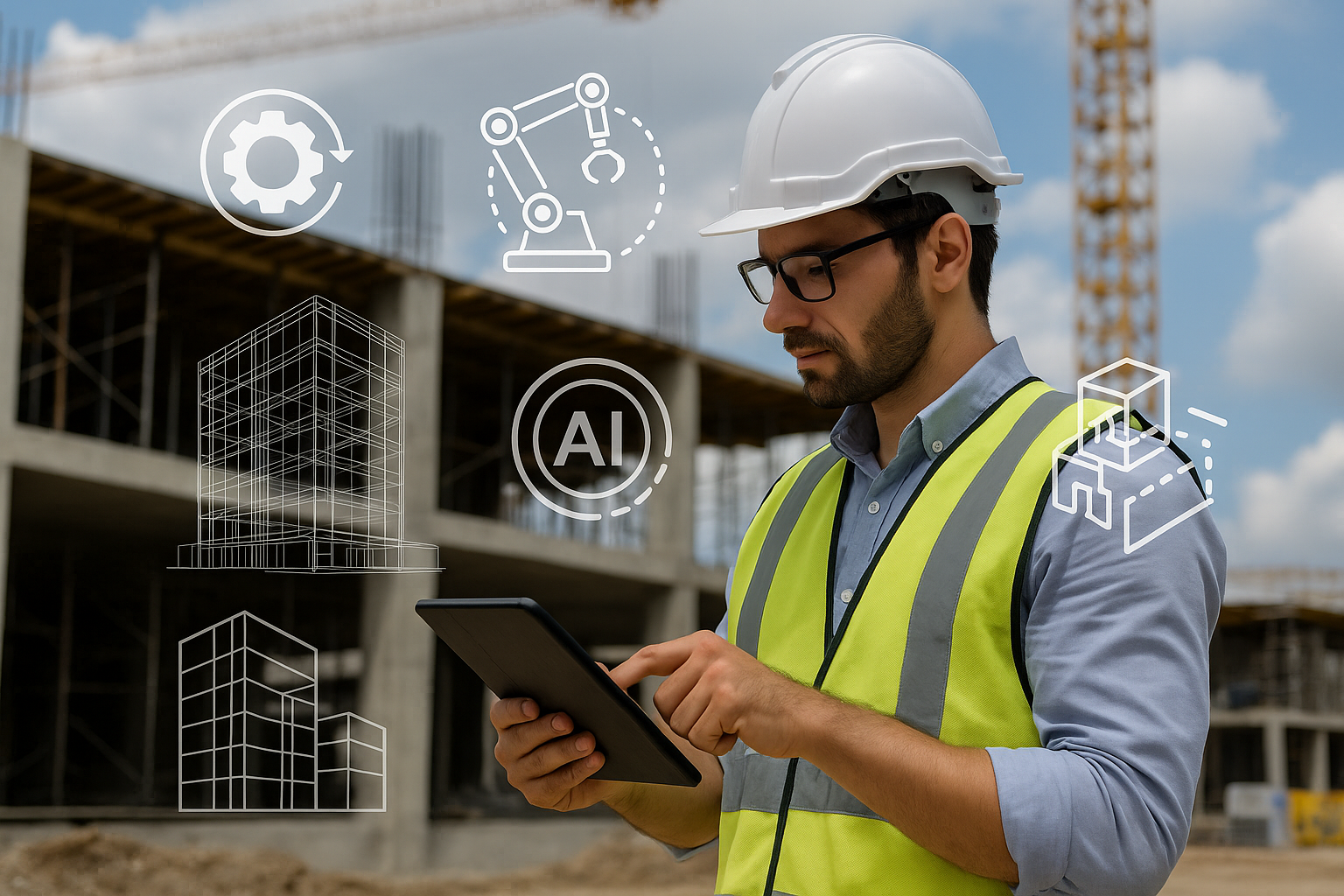
For years, our industry has been talking about digital transformation—BIM adoption, robotics on jobsites, prefab and modular, AI-enhanced project planning, data-driven safety programs, etc. Yet despite the buzz, construction continues to lag nearly every other major sector in productivity growth. Yep, it’s real.
This is no longer a theoretical concern. It is a real, structural threat to the competitiveness, scalability, and long-term resilience of AEC firms across the region and across the country. And, ps. Research shows we are even slower adopters in our region.
The Gap: A Productivity Problem That Isn’t Going Away
Construction productivity has barely moved in decades. Meanwhile, industries like manufacturing, logistics, and healthcare have used digital tools, automation, and process innovation to dramatically increase efficiency, reduce errors, and respond faster to changing market conditions.
In contrast, many construction firms are still wrestling with:
- Fragmented workflows and siloed data
- Limited adoption of BIM, reality capture, robotics, and AI (just ask our Technology Chair, Brandon Meinert)
- Slow uptake of modularization and industrialized construction
- Manual, repetitive administrative tasks that drain staff capacity. (I know first-hand and have fixed this issue!)
- Difficulty scaling expertise because knowledge lives in people, not systems
None of this is due to a lack of desire—our industry is filled with leaders who want to innovate. The challenge is the gap between intention and implementation. And maybe that little issue of “time.”
Why It Matters Now More Than Ever
Three converging pressures make tech adoption not just an advantage—but a necessity.
- Competitiveness
Owners/Clients increasingly expect firms to deliver more with fewer resources. Contractors and designers who leverage BIM, robotics, automation, and data analytics will simply outperform those that do not. Haven’t we said this forever now?
- Margin Pressure
Rising material costs, labor shortages, and schedule volatility all squeeze profitability. Digital tools reduce rework, unnecessary labor, and delays—three of the biggest margin killers.
- Workforce Reality
With fewer workers entering the industry and many nearing retirement, the talent gap is widening. Just look inside your organizations. If your management doesn’t have a GenX’r, you are experiencing the gap! Technology is a multiplier: it allows smaller teams to do more, and it bridges skill gaps by standardizing knowledge.
The firms who modernize will weather this storm. Those that don’t will fall further behind.
Opportunities for AEC Leaders
Here’s the good news: we are at an inflection point.
The tools have never been more accessible. Robotics is now priced for mid-sized contractors and not just the big dogs. AI tools can automate submittal reviews, scheduling analysis, safety insights, and more. BIM is no longer an optional skill—it’s becoming foundational. Prefab and modular are showing major ROI in cost, schedule, and safety.
Firms that move now can position themselves as the new leaders of a modernized, tech-enabled construction economy. And hint, the owners like this very much!
What This Means for You?
As an association with more than 200 member organizations—contractors, engineers, architects, owners, suppliers—we sit at the intersection of industry influence and industry opportunity. We have a unique role to play.
- Spotlight the Leaders
We should celebrate members who are pushing boundaries with robotics, AI, BIM workflows, and modular construction. Their stories not only demonstrate what’s possible—they inspire others to follow. Let us share yours!
- Facilitate Spaces for Education and Collaboration and OH SHOW UP…
Roundtables, workshops, and webinars focused on digital tools, prefab/modular strategies, and tech-enabled jobsite operations can help build confidence across our membership.
This is especially critical for small and midsized firms that want to innovate but don’t know where to start. We’ve got you in 2026!
- Advocate for Workforce Training—Especially for Women and Underrepresented Groups
Technology is a powerful equalizer. Digital tools open new doors for women, emerging professionals, and career changers who may not come from traditional construction backgrounds.
We can champion increased training programs and partnerships that make the tech-enabled construction workforce more inclusive, more skilled, and more future-ready.
- Champion Industrialized Construction as a Path Forward
Prefab and modularization are no longer fringe approaches—they are fast becoming standard practice. Supporting education and collaboration around industrialized construction will accelerate adoption and boost regional competitiveness.
Where Do We Go From Here?
Every firm—large or small—can take steps today to modernize:
- Assess your digital maturity
- Implement one new tool (not ten) and build momentum
- Train your workforce proactively
- Connect with peers who are further along the journey
- Celebrate success stories to accelerate cultural buy-in
The productivity challenge in construction is real, but so is the opportunity. By embracing innovation, investing in people (workforce), and learning from one another, we can transform this threat into one of the greatest competitive advantages our region has ever seen.
And SLC3 will be here to lead that conversation every step of the way as well as deliver on our promise to advance your knowledge, facilitate collaboration, and address our biggest threats!