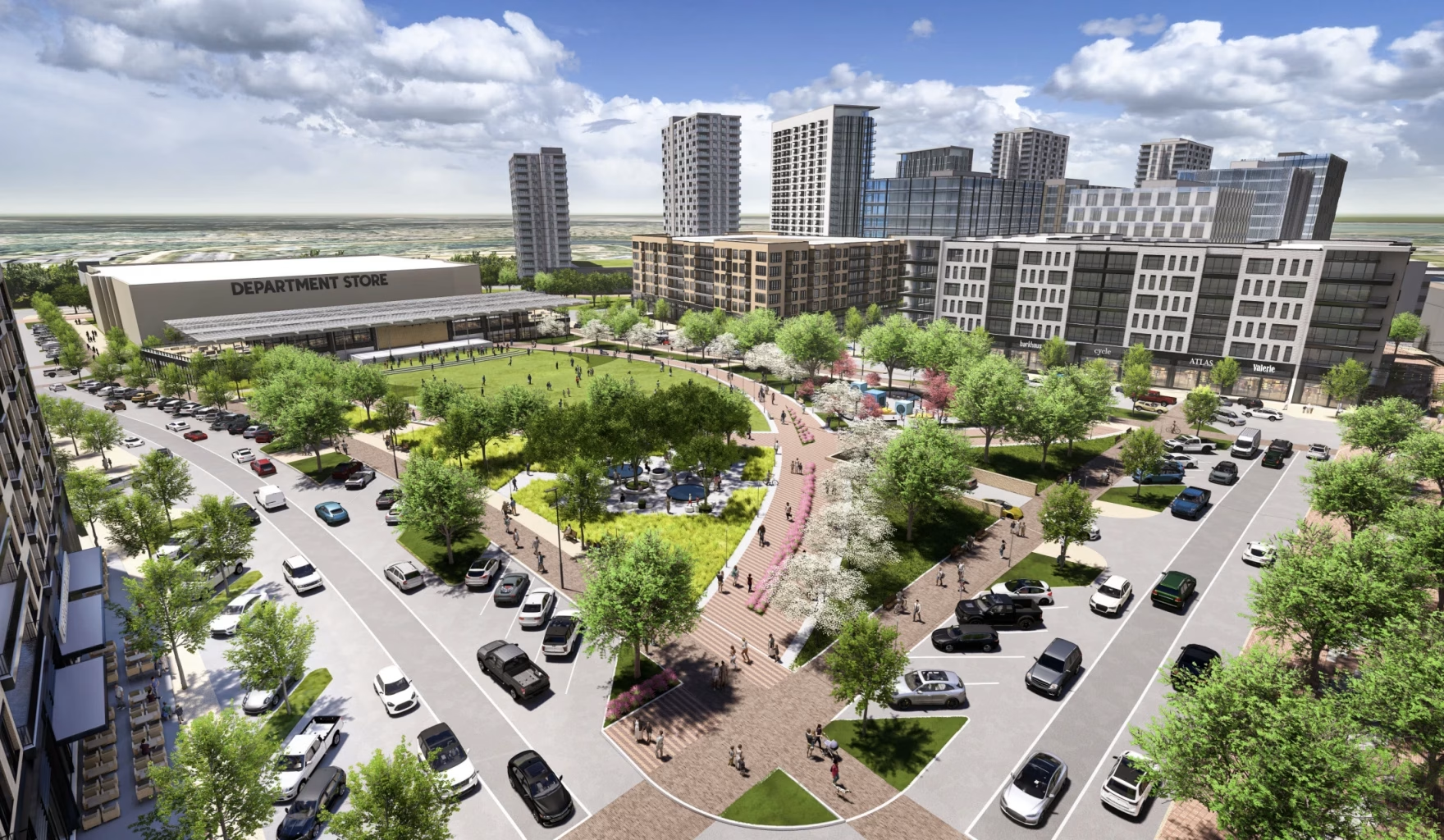
As you know, infrastructure work on the $2 billion Downtown Chesterfield project is officially underway, marking the next big bet on a “true downtown” in West St. Louis County. The former Chesterfield Mall site will be remade into a 117-acre mixed-use district with roughly 2,700 residential units and millions of square feet of office, retail, restaurant, and entertainment space. STLPR+1 Construction crews are starting with utilities, streets, and grading, kicking off what will likely be a decade-long build-out. Constructionreview+1
If this all sounds familiar, it should. The region has seen a version of this movie before—WingHaven in O’Fallon, Missouri.
WingHaven: A 1999 Vision, Seen in 2025
WingHaven launched in the late 1990s as a 1,200-acre master-planned community built on former farmland in a fast-growing exurban corridor. The development was intentionally framed as a “city within a city,” combining housing, offices, retail, schools, churches, and recreation under a unifying “LifeWorks” concept—living, learning, working, playing, and praying in one place. St. Louis Magazine+1
Two decades later, most of that vision is actually built out:
- 2,092 of 2,135 planned housing units have been delivered.
- About 3.99 million square feet of commercial space is in place, including retail, medical, daycare, banking, and a hotel. Revize
- The Mastercard operations center became a major employment anchor and helped pull additional residents and businesses into the area. Gateway Realty Group
WingHaven today reads less like a speculative experiment and more like a fully integrated, upper-middle-income suburb with a strong identity and stable tax base.
For Downtown Chesterfield, WingHaven is a rare gift: a local case study showing what a large-scale, mixed-use “downtown” looks like 20+ years down the road.
What Worked at WingHaven — And Why It Matters for Chesterfield
- Jobs and daily life came first, not just shiny destinations.
WingHaven’s success is tied to everyday uses: employers like Mastercard, neighborhood retail, schools, healthcare, childcare, and recreation. Gateway Realty Group+1 It didn’t just chase “lifestyle center” tenants; it built a place where people could realistically live their whole week.
For Downtown Chesterfield, that suggests the most important metric isn’t how dramatic the renderings are, but how quickly the project lands workplaces, services, and essential retail that serve residents within a 10-minute walk.
- Scale and mix create resilience.
WingHaven’s thousands of homes plus nearly 4 million square feet of commercial space create a critical mass of people and activity. Revize When one segment (say, a retail strip) softens, other uses—offices, homes, and institutional uses—keep the area viable.
Downtown Chesterfield is smaller at 117 acres but still ambitious: roughly 4.5 million square feet of mixed-use space in Phase I alone. Shopping Center Business+1 If the mix is balanced—residential, office, entertainment, and civic uses—it has a better shot at weathering cycles in any single asset class.
- Walkability has to be real, not just rendered.
WingHaven’s town center, parks, and golf course are all stitched together with sidewalks and local streets, which helps reinforce it as a place rather than just another interchange off the highway. Revize+1
Downtown Chesterfield’s plan to dedicate about a quarter of its acreage to parks, trails, sidewalks, and public plazas is in the same spirit. The lesson from WingHaven: those spaces only matter if they’re funded, programmed, and maintained for decades, not just celebrated at ribbon-cutting.
- Governance will shape how the place feels to live in.
WingHaven’s master association and layered HOAs help maintain standards, amenities, and property values—but they also add complexity and cost that residents feel every month. themonscheinteam.com+1
Downtown Chesterfield will have its own mix of city involvement, private ownership, and potential HOA or condo structures. Getting that governance model right matters for long-term affordability, small-business friendliness, and how “public” public spaces truly feel.
What to Watch as Downtown Chesterfield Rises
Looking at WingHaven’s 20-plus-year trajectory, a few big questions emerge for Downtown Chesterfield:
- Will it land enduring employment anchors, or lean too heavily on restaurants, entertainment, and experiential retail that are more vulnerable to cycles?
- Can it build a true resident base early, not just market-rate apartments but a range of housing types and price points that keep the district from becoming a luxury island?
- Will the public realm stay funded and active after the initial development push—farmers markets, concerts, seasonal events, and everyday programming that turn plazas into “third places”?
- How will it connect to the larger region? WingHaven benefited from sitting in the path of St. Charles County’s explosive growth. Chesterfield already has strong incomes and retail gravity; the challenge is stitching Downtown Chesterfield into that ecosystem without cannibalizing existing centers.
A Regional Test of “Suburban Downtowns”
WingHaven proved that a master-planned, mixed-use community in the outer suburbs could mature into a durable “city within a city” with real jobs, housing, and amenities—not just a lifestyle marketing pitch. Revize+1