
At the beginning of a new year, goals are easy to set and hard to keep. We start with good intentions, clear plans, and optimism—only to find ourselves overwhelmed a few weeks in, wondering where the momentum went.
The problem usually isn’t motivation or discipline. It’s the lack of a system.
Big goals don’t fail because we don’t care enough. They fail because they aren’t supported by small, repeatable habits that fit into real life. When days are packed with meetings, deadlines, family obligations, and the unexpected, good intentions alone aren’t enough.
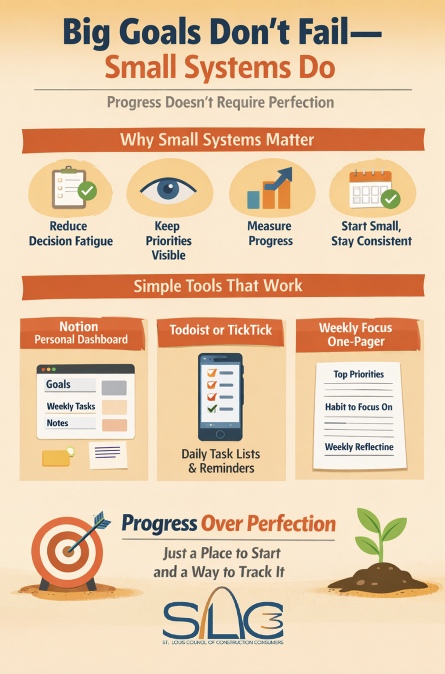
Why Small Systems Matter
A system doesn’t have to be complicated or time-consuming. In fact, the simpler it is, the more likely it is to stick.
Small systems:
- Reduce decision fatigue
- Keep priorities visible
- Turn progress into something measurable
- Make it easier to start—even on busy days
Most importantly, they remove the pressure of perfection. Progress happens when there’s a place to begin and a way to track what matters.
Three Simple Tools That Actually Work
You don’t need all of these. One is enough.
- Notion: A Simple Personal Dashboard
Notion can sound intimidating, but at its core it’s just a flexible workspace. Many people use it as a single page that holds:
- A short list of top goals
- Weekly priorities
- Notes or reminders
The benefit is visibility. When everything lives in one place, you don’t have to remember it all—you just have to show up and check in.
Best for: People who like structure and customization without rigid rules.
- Todoist or TickTick: Simple, Daily Accountability
If you prefer something more straightforward, task-based apps like Todoist or TickTick can be powerful. They allow you to:
- Break goals into small, actionable tasks
- Set reminders
- See progress over time
The key is not overloading the list. A short, realistic daily list builds confidence and momentum far more effectively than a long one you never finish.
Best for: People who want clarity and consistency with minimal setup.
- The Weekly Focus One-Pager
Sometimes the best tool isn’t digital at all.
A simple weekly one-pager—printed or handwritten—can include:
- Top 3 priorities for the week
- One habit or behavior to focus on
- A short reflection at the end of the week
This works because it forces intention. You’re not tracking everything—just what matters most right now.
Best for: People who want focus without screens or distractions.
Progress Over Perfection
The goal isn’t to track everything or to optimize every moment. The goal is to make progress visible.
When progress is visible:
- Motivation follows action
- Small wins compound
- Goals feel achievable instead of overwhelming
Progress doesn’t require perfection—just a place to start and a way to track it.
As we move further into the year, consider choosing one small system that supports where you want to go. Not a major overhaul. Not a complicated plan. Just something simple enough to use even on your busiest days.
Because the goals that last aren’t the ones we think about the most—they’re the ones we build systems around.