
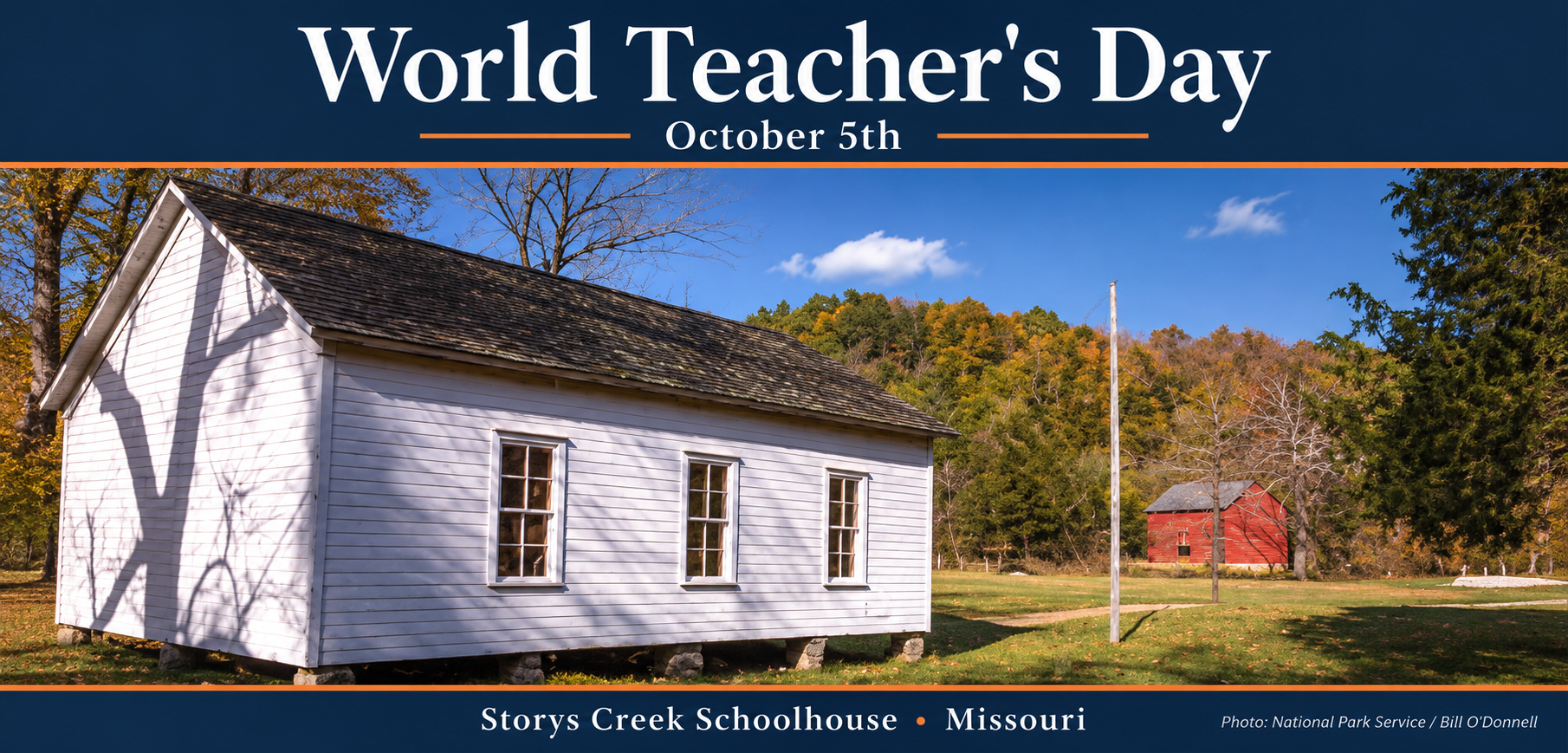
Before There Were Lunch & Learns, There Were One-Room Schoolhouses
On World Teachers’ Day, a little Missouri history offers a lesson for today’s workplaces.
Imagine managing a room full of people with different experience levels, different assignments, and very different attention spans—all at once.
Sound like your last project meeting?
For teachers in Missouri’s one-room schoolhouses, that was an ordinary school day. In honor of World Teachers’ Day, October 5, we’re taking a quick look at a few things you might not know about these small buildings and the big responsibilities inside them.
The “little red schoolhouse” wasn’t necessarily red.
According to the National Park Service, Missouri once required wooden schoolhouses, except log buildings, to be painted white—with light blue interiors. Apparently, even the schoolhouse had design standards.
They weren’t just a pioneer-era phenomenon.
One-room schools remained widely used in rural Missouri into the 1950s, with many in the Ozarks operating into 1959. That puts them considerably closer to living memory than the covered-wagon image might suggest.
Mentoring was built into the classroom.
Older students helped younger children with their lessons, while younger students heard material they would study later. Think of it as an early version of learning alongside an experienced colleague—without the onboarding portal.
One building wore many hats.
Schoolhouses often hosted elections, church services, and even weddings. Long before today’s conversations about flexible spaces, these communities were putting one modest building to work for many purposes.
There’s a useful connection to our industry: knowledge moves forward because someone takes the time to share it.
The superintendent explaining the reasoning behind a sequence. The architect helping a young designer understand a detail. The trades instructor demonstrating a technique. The colleague patiently answering a question for the third time.
Each is doing something teachers do every day: helping someone move from “I don’t understand” to “I can do this.”
Today, thank a teacher who made a difference in your life. Then consider one thing you could teach someone on your team this week.
Image Reference: Missouri’s Story’s Creek Schoolhouse
No chalkboard required.
Added bonus:
The teacher might still have been a student, too.
Around 1900, a teacher in the Missouri Ozarks could qualify for an entry-level teaching certificate with an eighth-grade education and a passing certification exam—without a college degree. Requirements increased over time, and teachers pursued additional training through summer classes and “normal schools,” the predecessors of many teachers’ colleges. Imagine teaching several grade levels during the school year, then returning to the classroom yourself each summer. Lifelong learning was already part of the job!
By: Kelly Jackson