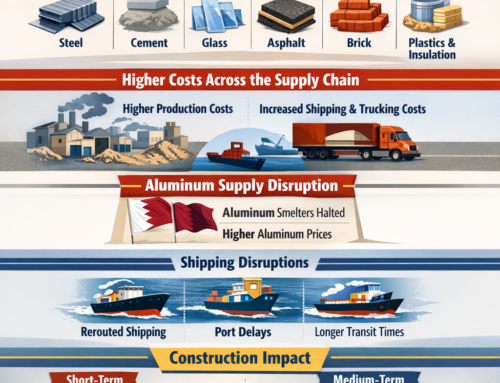
Steel (rebar, structural steel, studs)
Risk level: Very high
Steel is one of the most exposed materials because:
- Steel production is energy-intensive
- Global steel markets react quickly to shipping disruptions
- Tariffs and supply constraints are already pushing prices higher
Recent industry estimates show steel prices already up about 13% year-over-year, contributing to higher construction costs.
Construction impact
- Structural steel frames
- Rebar in concrete foundations
- Metal studs and decking
- Bridge and infrastructure projects
If shipping disruptions persist or energy costs rise further, steel could be one of the first materials to spike again.
Asphalt and paving materials
Risk level: Very high
Asphalt is directly tied to crude oil prices, since it is a petroleum by-product.
When oil rises:
- asphalt production costs rise
- diesel costs for paving crews increase
- transportation of aggregates becomes more expensive
Oil price spikes affect construction costs through transport logistics, petrochemical materials, and energy-intensive manufacturing, all of which push project budgets higher.
Construction impact
Highway paving
- Parking lots
- Roofing membranes
- Waterproofing systems
Infrastructure projects are particularly sensitive to asphalt price swings.
Aluminum (windows, curtain walls, roofing)
Risk level: High
Aluminum markets are tight due to supply constraints and strong demand.
Analysts project aluminum prices could reach around $3,000 per metric ton in 2026, reflecting potential supply deficits.
Construction impact
- Window framing
- Curtain wall systems
- Roofing panels
- Electrical and HVAC components
Commercial buildings and high-rise construction are especially exposed.
Cement and concrete
Risk level: Moderate to high
Cement production requires large amounts of energy, including coal, natural gas, and petroleum-based fuels.
Higher energy prices increase cement manufacturing costs and freight costs for ready-mix concrete.
Construction impact
- Foundations
- Concrete slabs
- Bridges and infrastructure
- Parking structures
Because concrete is heavy and regionally supplied, fuel costs and trucking rates often determine price movements.
Petrochemical building materials
Risk level: Moderate to high
Many building materials are derived from petroleum and natural gas, including:
- PVC pipe
- insulation foam
- roofing membranes
- sealants and coatings
- synthetic flooring
When crude prices increase, petroleum-based construction products usually follow because their feedstocks become more expensive.
Copper and electrical components
Risk level: Moderate
Copper prices respond to both energy costs and industrial demand.
Copper products used in construction include:
- electrical wiring
- transformers
- HVAC systems
- plumbing systems
Copper prices have already increased roughly 4.9% year-over-year, adding pressure to construction budgets.
Materials less affected (for now)
Some materials are relatively less exposed to Middle East disruptions:
- Lumber – more North American supply
- Aggregates (sand, gravel, stone) – locally sourced
- Gypsum drywall – largely domestic production
These can still rise due to fuel costs, but they are less tied to global shipping disruptions.
What contractors and developers are doing
In response to these risks, many projects are already adjusting strategies:
- Buying long-lead materials earlier
- Adding price-escalation clauses to contracts
- Stockpiling metals or mechanical equipment
- Increasing bid contingencies
Industry forecasts suggest overall construction costs could rise about 4–6% in 2026, with higher volatility if geopolitical disruptions persist.