Building Giants: The Amazing Engineering Behind Skyscrapers
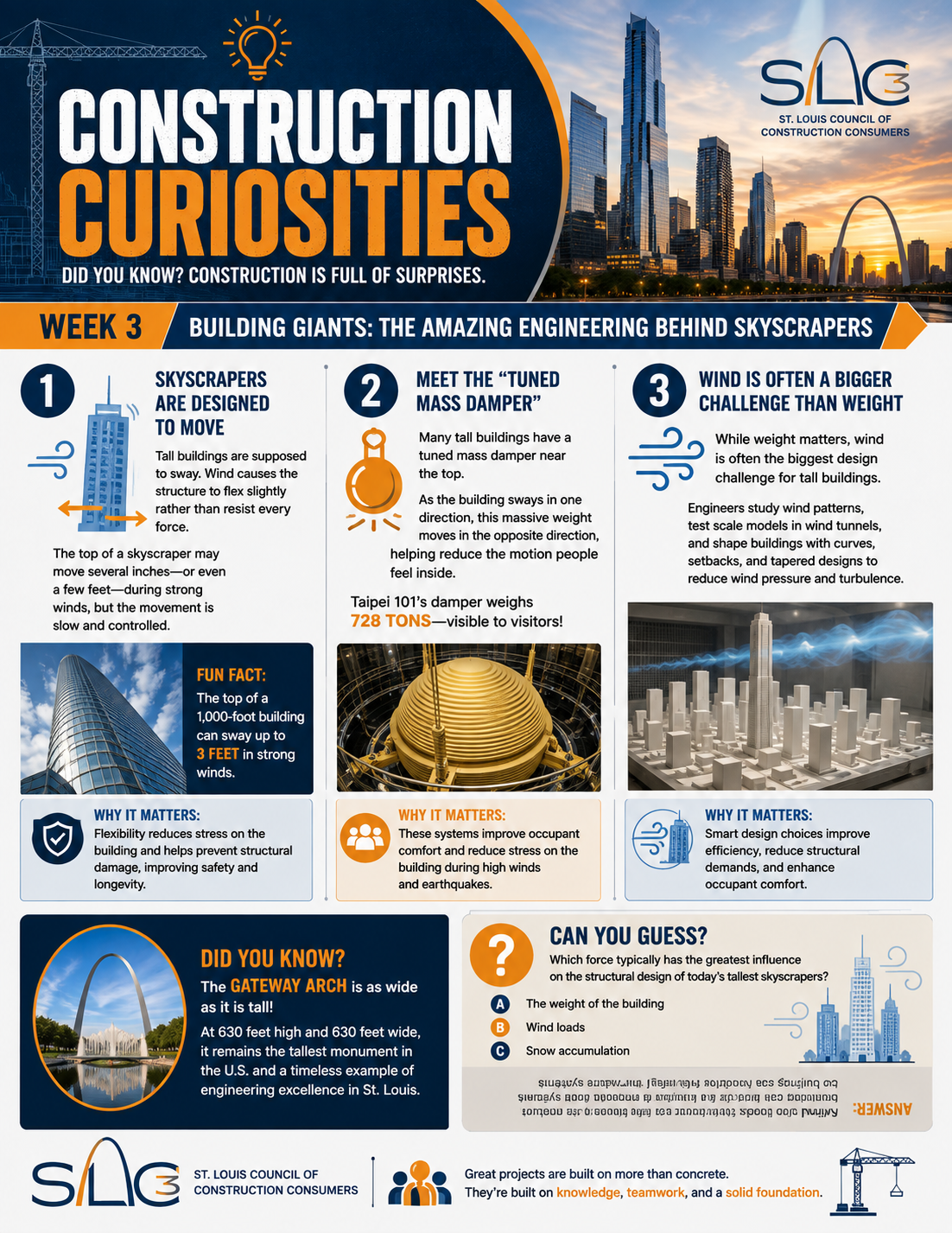
Modern skyscrapers are more than just tall buildings—they’re engineering masterpieces designed to move, flex, and withstand the forces of nature. Here are three fascinating facts about the giants that shape our skylines.
🏙️ Skyscrapers Are Designed to Move
It may sound surprising, but tall buildings are supposed to sway.
As wind pushes against a building, the structure is engineered to flex slightly rather than resist every force. This controlled movement reduces stress on the building and helps prevent structural damage.
Depending on its height and design, the top of a skyscraper may move several inches—or even a few feet—during strong winds. Most occupants never notice because the movement is slow and carefully controlled.
Why it matters: A building that’s too rigid is actually more vulnerable. Engineers intentionally design flexibility into tall structures to improve both safety and longevity.
⚖️ Meet the “Tuned Mass Damper”
Many of the world’s tallest buildings hide a remarkable piece of engineering near the top—a tuned mass damper.
Imagine a giant steel ball or massive concrete weight, sometimes weighing hundreds of tons, suspended inside the building. As the structure sways in one direction, the damper moves in the opposite direction, helping reduce the motion people feel inside.
One of the most famous examples is the enormous 728-ton tuned mass damper inside Taipei 101, which is visible to visitors.
Why it matters: These systems improve comfort for occupants while reducing stress on the building during high winds and even earthquakes.
🌬️ Wind Is Often a Bigger Design Challenge Than Weight
Many people assume the greatest challenge in designing a skyscraper is supporting its weight. In reality, wind is often the governing factor.
Structural engineers spend countless hours analyzing wind patterns, testing scale models in wind tunnels, and refining building shapes to reduce wind pressure and turbulence.
That’s one reason many modern towers feature rounded corners, setbacks, or tapered designs—they aren’t just architectural statements. They’re helping the building perform better.
Why it matters: Every curve, setback, and angle can improve efficiency, reduce structural demands, and enhance occupant comfort.
💡 Construction Curiosity
Did you know the Gateway Arch is as wide as it is tall?
At 630 feet high and 630 feet wide, the Arch remains the tallest monument in the United States and one of the world’s most recognizable engineering achievements. Designed by architect Eero Saarinen and completed in 1965, it was an extraordinary feat of structural engineering and precision construction that continues to define the St. Louis skyline.
🏗️ Can You Guess?
Which force typically has the greatest influence on the structural design of today’s tallest skyscrapers?
- The weight of the building
B. Wind loads
C. Snow accumulation
Answer: B. Wind loads. While gravity is always a major consideration, wind often becomes the controlling design force as buildings grow taller. That’s why structural engineers devote extensive time to wind tunnel testing, computer modeling, and innovative systems that help skyscrapers safely flex with nature instead of fighting against it.