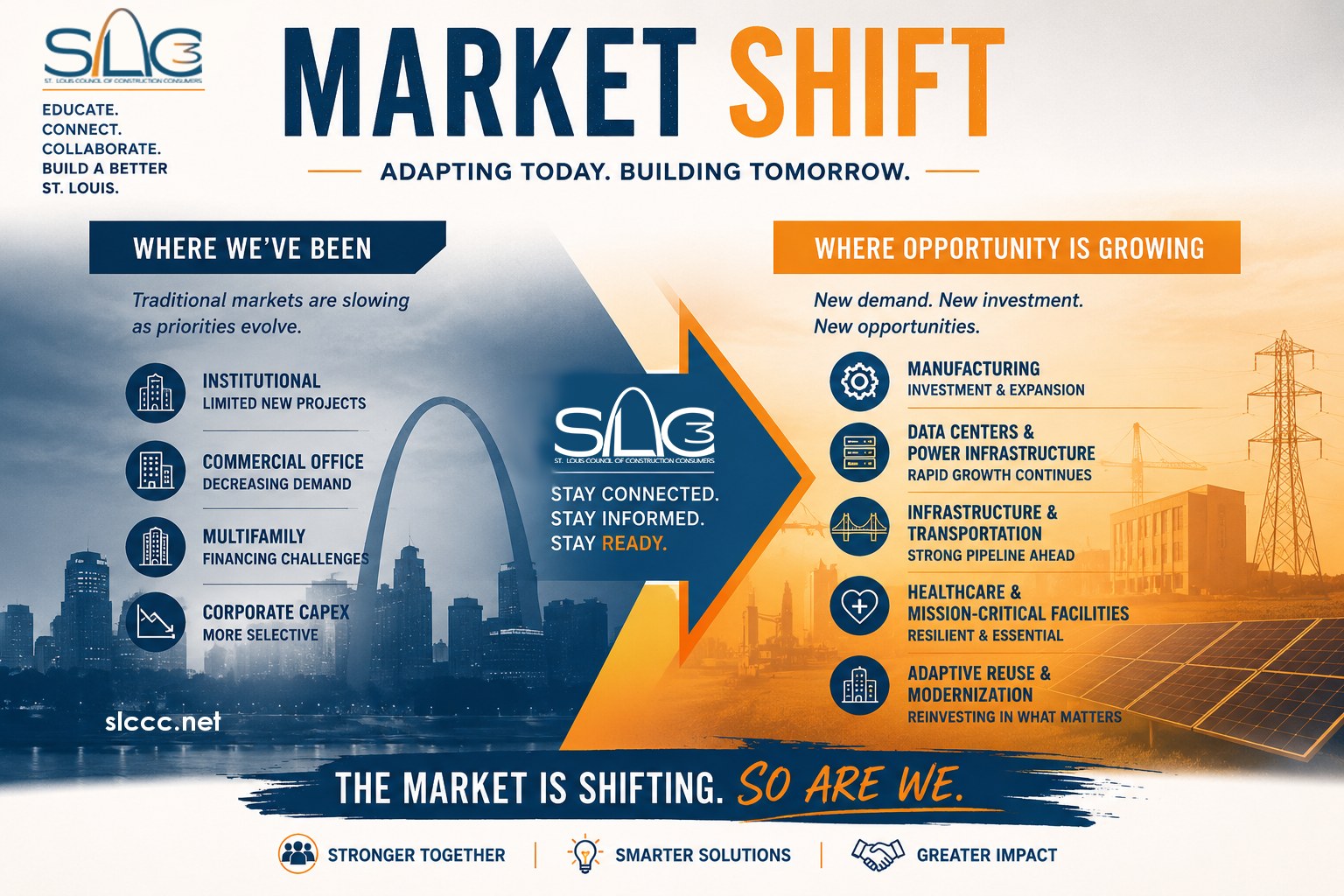
Manufacturing and Industrial
If I were advising a design firm today, manufacturing would be at the top of my list.
Nationally, manufacturing investment continues to be driven by reshoring, supply-chain resilience, automation, and federal incentives. Companies are investing in production facilities, distribution centers, utility upgrades, and modernization projects.
For St. Louis, this includes:
- Food and beverage manufacturing
- Advanced manufacturing
- Aerospace and defense suppliers
- Life sciences production facilities
- Logistics and distribution
These projects often require architecture, civil, structural, MEP, process engineering, and permitting expertise.
Data Centers and Power Infrastructure
The fastest-growing construction segment in the country is data centers. Industry analysts expect significant growth even while other commercial sectors remain flat.
What’s interesting is that the real opportunity isn’t always the data center itself. It’s:
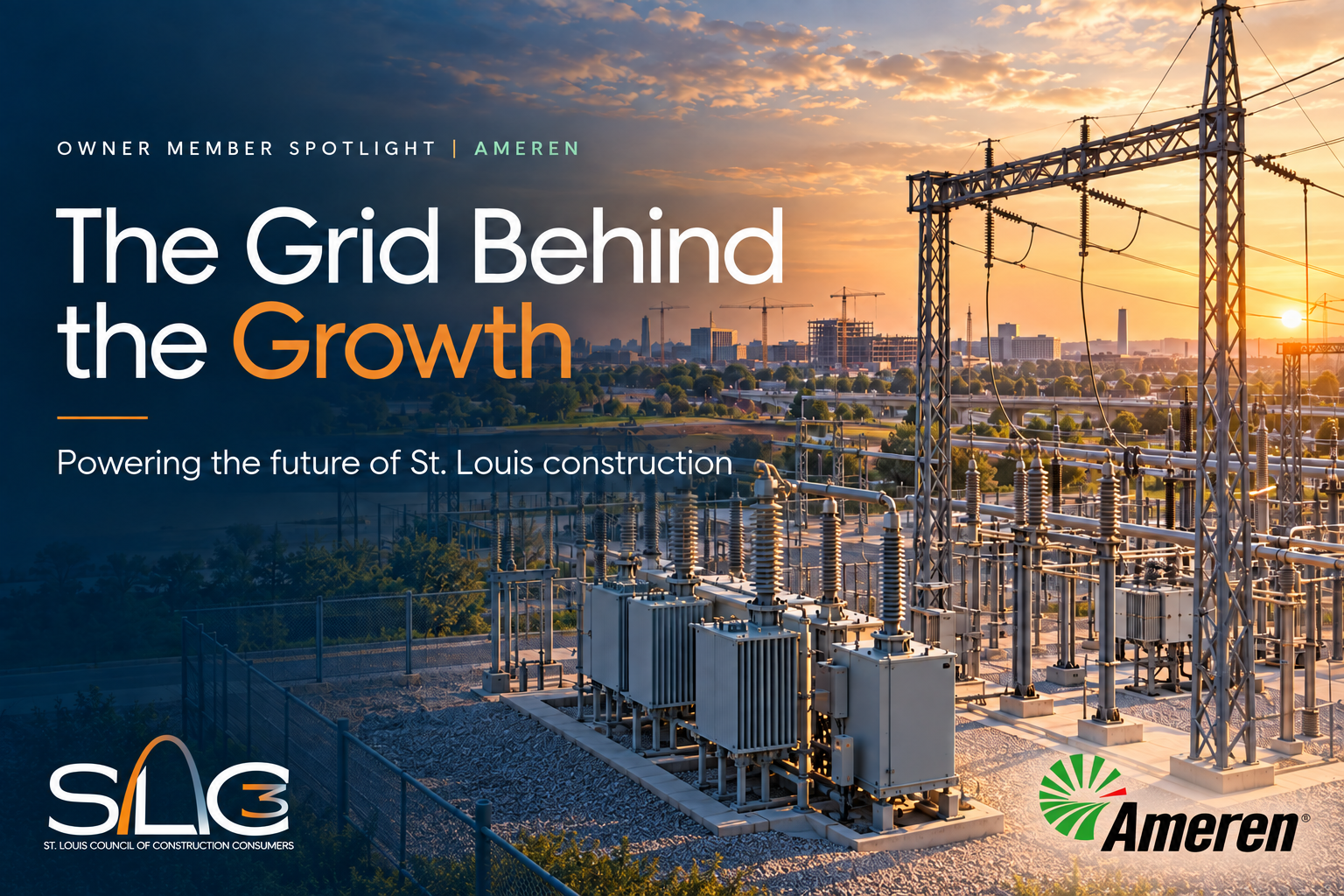
- Electrical infrastructure
- Utility upgrades
- Substations
- Transmission improvements
- Water systems
- Site development
Many engineering firms that traditionally focused on commercial or institutional work are pivoting toward energy and infrastructure support services.
Infrastructure and Transportation
Infrastructure funding remains one of the strongest long-term opportunities.
The St. Louis region continues to see investments in freight corridors, transportation systems, transit improvements, and rehabilitation projects.
These projects may not have the glamour of a new hospital tower, but they often provide predictable workloads over multiple years.
Adaptive Reuse and Renovation
Many owners aren’t building new—they’re reinvesting in existing assets.
Projects like The Victor are examples of a broader trend:
- Office-to-residential conversions
- Historic renovations
- Facility modernization
- Tenant improvements
- Campus upgrades
Owners are often choosing renovation over new construction because financing remains expensive.
Mission-Critical and Healthcare
While some institutional sectors have slowed, healthcare remains more resilient than traditional office and commercial work.
The Cardinal Glennon expansion is one example of significant healthcare investment continuing in the region.
Hospitals, outpatient facilities, specialty care centers, and medical research environments continue to generate design opportunities.
What Firms May Need to Do Differently
The firms that seem to be winning right now are not waiting for their traditional clients to come back.
They’re:
- Diversifying markets
- Pursuing design-build partnerships
- Expanding geographically
- Building relationships with contractors earlier
- Investing in industrial and infrastructure expertise
- Pursuing federal and state-funded projects
Sources: national commercial construction is being held back by rates, material costs and labor, while data centers remain a major growth exception. The St. Louis region also has a major freight and infrastructure pipeline, including a $9 billion priority project list with several Illinois-side investments.