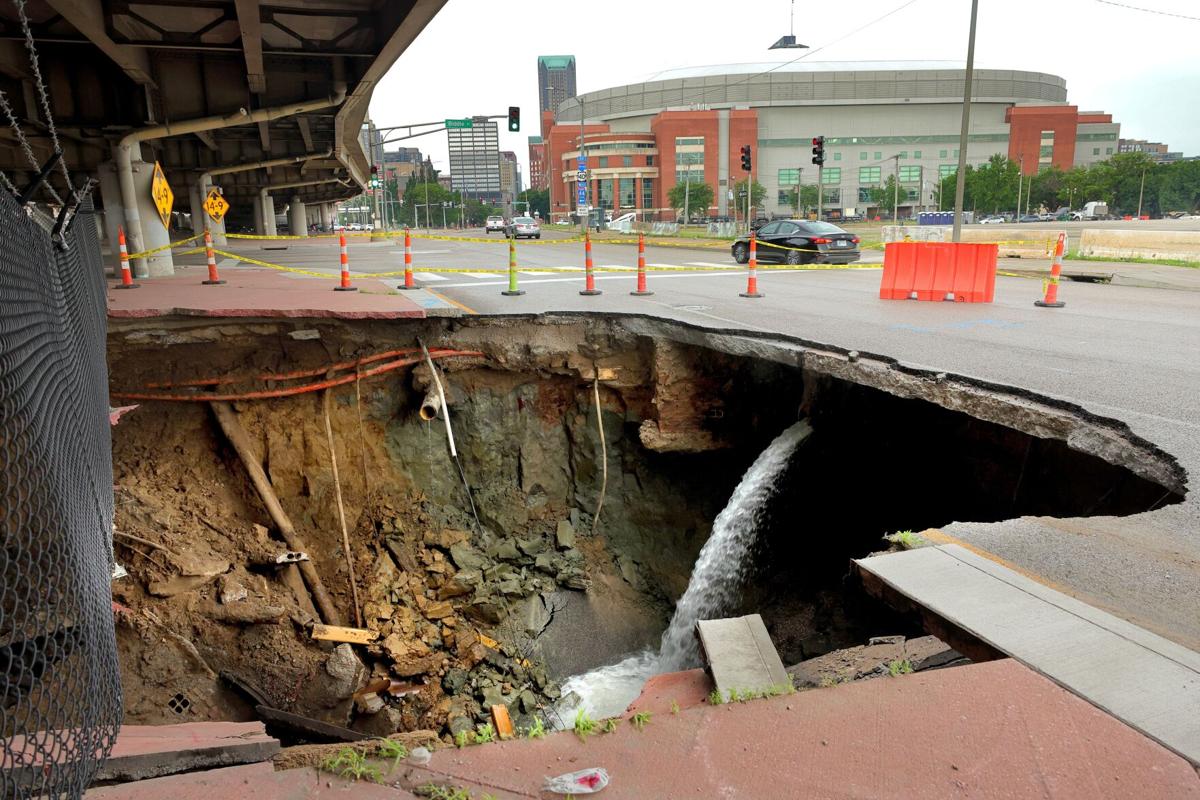
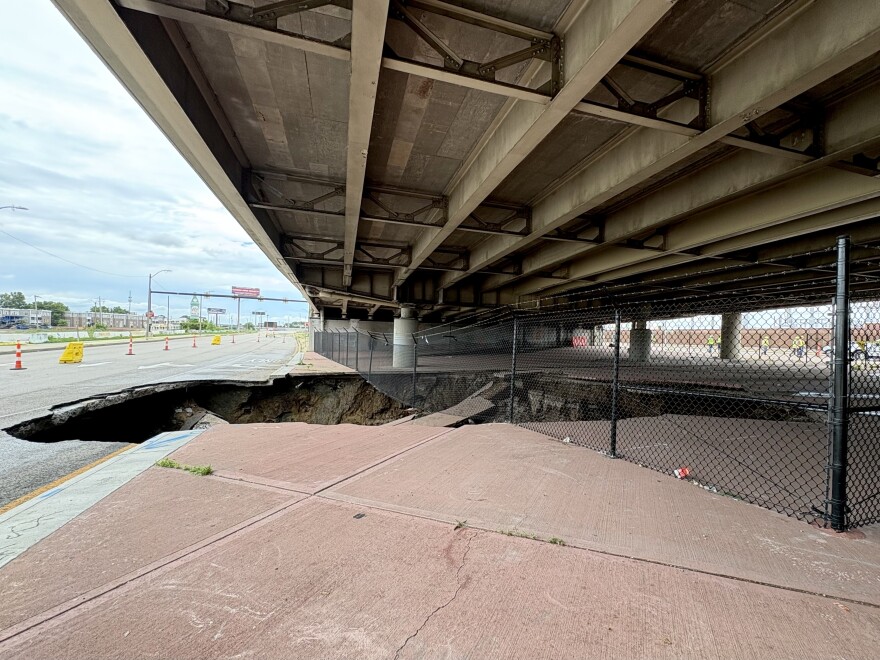
When a massive sinkhole suddenly opened beneath Interstate 44 in downtown St. Louis earlier this month, it quickly became one of the region’s most talked-about news stories. Thousands of commuters experienced detours, businesses felt the impact, and dramatic images of a gaping crater circulated across the country.
But behind every headline is an incredible story of engineering, construction, and collaboration.
What Happened?
The sinkhole formed after multiple water main failures beneath North Broadway near Biddle Street. Officials determined that a century-old 20-inch water main failed first, triggering additional failures in nearby 12-inch and 10-inch mains. The rushing water washed away the supporting soil beneath the roadway, creating a massive void directly beneath Interstate 44.
The collapse exposed bridge foundations supporting one of downtown’s busiest interstate corridors and required the immediate closure of portions of I-44, several ramps, Broadway, and surrounding streets while engineers evaluated the structural integrity of the roadway.
A Multi-Agency Construction Effort
Repairing a sinkhole of this size isn’t as simple as filling it with dirt.
The recovery effort has required coordination between numerous organizations, including:
- City of St. Louis Water Division
- Missouri Department of Transportation (MoDOT)
- City Streets Department
- Utility contractors
- Geotechnical engineers
- Structural engineers
- Heavy civil construction crews
- Public safety personnel
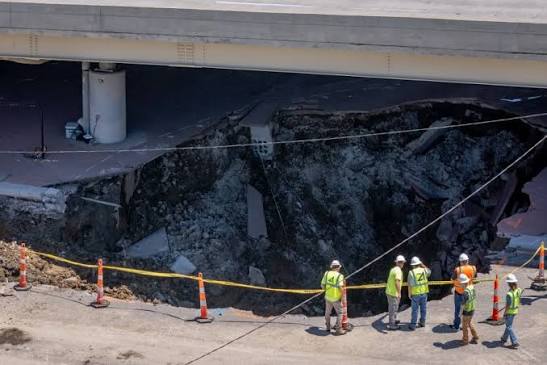
Construction teams first had to stabilize the surrounding ground before excavation could safely continue. Crews intentionally expanded portions of the sinkhole to reach damaged utilities more than 35 feet below the surface. Engineers also installed protective shoring systems to allow workers to safely enter the excavation and repair underground infrastructure.
The Construction Challenge
For heavy civil contractors, projects like this demonstrate why underground infrastructure is among the most technically demanding work in the industry.
Crews have had to:
- Excavate around active bridge foundations
- Stabilize unstable soils
- Replace multiple damaged water mains
- Protect nearby sewer infrastructure
- Continuously monitor bridge supports
- Coordinate multiple utility systems
- Restore roadway foundations before rebuilding the pavement
Every step requires careful sequencing to ensure both worker safety and the long-term stability of the interstate above.
Progress Continues
The good news for commuters is that significant progress has been made.
MoDOT recently reopened Interstate 44 after engineers determined the bridge structure remained sound and stabilization work had progressed sufficiently. Surface streets immediately surrounding the repair site remain closed while crews continue rebuilding underground utilities and completing permanent roadway repairs.
An Important Reminder
The sinkhole has also highlighted a challenge facing communities across the nation: aging infrastructure.
Many of the water mains involved in this incident were more than 100 years old. As utilities across the country continue to age, infrastructure investment becomes increasingly important—not only to prevent emergencies, but also to support economic development, public safety, and regional growth.
While most residents only noticed the road closures, construction professionals recognize the remarkable effort happening below the surface. This project is a reminder that behind every repaired roadway is an extraordinary team of engineers, contractors, skilled tradespeople, inspectors, and public agencies working together to restore the infrastructure our communities depend on every day.