Risk Management: Solving Tomorrow’s Problems Before They Happen
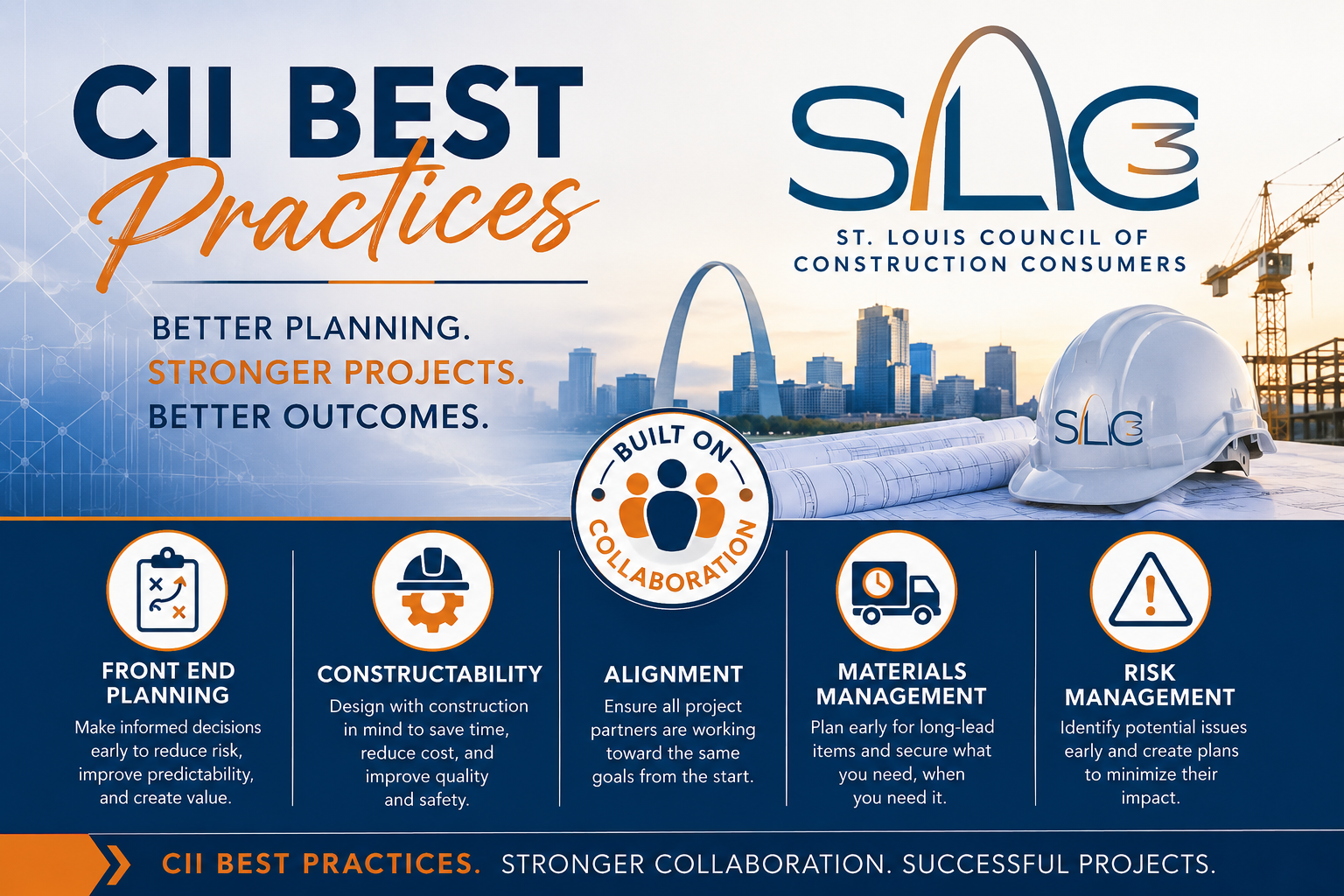
Every construction project carries risk. The difference between successful projects and struggling ones often isn’t the number of risks—they all have them. The difference is how early those risks are identified and managed.
The Construction Industry Institute (CII) recognizes Risk Management as a Best Practice because proactive planning consistently delivers better outcomes than reacting to problems after they occur.
Today’s construction environment presents more uncertainty than ever. Labor shortages, volatile material pricing, supply chain disruptions, permitting delays, weather events, and evolving regulations all have the potential to impact project success. Waiting until these issues surface in the field often results in costly schedule delays and budget overruns.
Leading owners are shifting from asking, “What went wrong?” to “What could go wrong, and how do we prepare for it?”
Effective risk management begins early by identifying potential challenges, evaluating their likelihood and impact, assigning ownership, and developing mitigation strategies before construction begins.
Questions Every Project Team Should Be Asking
- What are the greatest threats to our schedule?
- Which materials or equipment present procurement risks?
- Are there labor shortages for critical trades?
- What site conditions could impact construction?
- What contingency plans are in place if key assumptions change?
Projects that openly discuss risks at the beginning create fewer surprises later. They also make better decisions because everyone understands where the greatest vulnerabilities exist.
Perhaps most importantly, risk management should not be a one-time exercise. The strongest project teams revisit their risk register throughout design and construction, adjusting as conditions evolve.