Data centers can represent significant construction and economic-development opportunities. These highly specialized facilities require substantial investments in electrical systems, backup power, cooling infrastructure, security, telecommunications, and building controls.
They can also place unusual demands on the communities in which they operate.
Unlike a typical commercial building, a data center can require enormous amounts of electricity, operate critical computing and cooling equipment around the clock, and generate continuous mechanical noise. Its infrastructure demands can affect electric utility capacity, adjacent land uses, infrastructure investment, and long-term community planning.
St. Louis’ new framework attempts to establish expectations before proposals reach the construction phase.
Greater Certainty—With Additional Responsibilities
For owners and developers, clearly defined regulations can provide something every project needs: predictability.
Knowing where a facility may be located and which environmental, operational, and community requirements will apply allows project teams to evaluate feasibility earlier. It also makes early coordination with utilities, design professionals, public officials and surrounding neighborhoods increasingly important.
Project teams considering data center work in the city should expect greater attention to:
- Site selection and zoning compliance
- Electrical and utility capacity
- Mechanical-system noise
- Environmental impacts
- Community engagement
- Long-term operational performance
These issues will need to be addressed during planning—not after design is substantially complete.
Why It Matters to the St. Louis Bi-State Region
Data centers are becoming a major construction market, but for the St. Louis region, their impact could extend well beyond the facilities themselves. One of the most significant concerns for owners and the broader AEC community is workforce capacity.
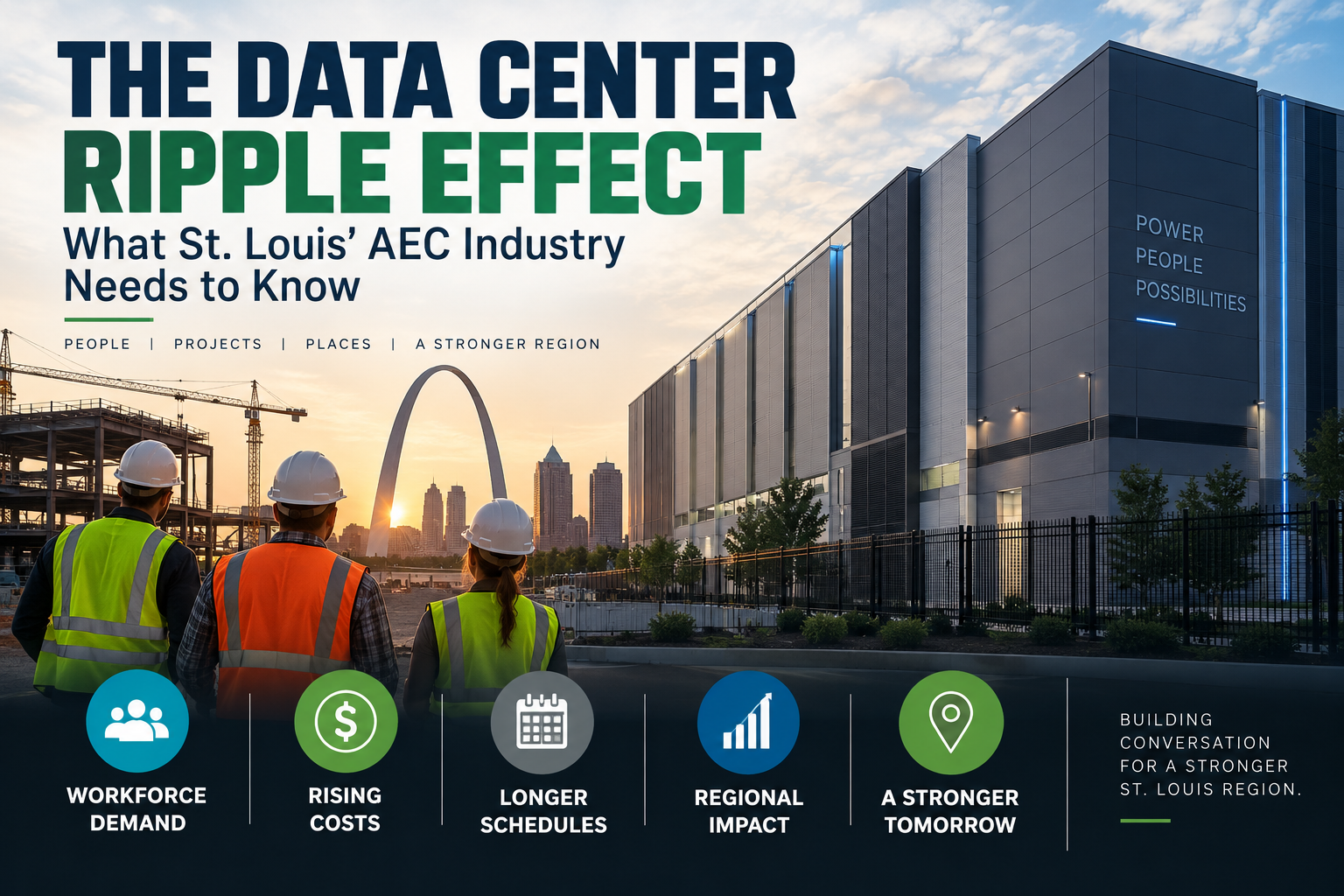
Data centers are highly labor-intensive projects with particularly strong demand for electricians, mechanical trades, controls specialists, pipefitters, and other skilled workers. As multiple large projects compete for an already constrained workforce, the effects can ripple across the entire regional construction market.
For SLC3 members, that could mean greater competition for skilled labor, rising labor rates, reduced workforce availability, longer schedules, and increased project costs—even for owners who never build a data center.
This makes workforce planning a regional issue, not simply a data center issue. Owners may need to engage contractors and trade partners earlier, evaluate labor availability during project planning, consider procurement and scheduling strategies, and build greater flexibility into budgets and timelines.
Data center investment can bring substantial construction activity to the region, but the industry must also prepare for what that level of demand could mean for every other project competing for the same skilled workforce. Understanding and planning for that ripple effect may be one of the most important conversations our region needs to have now.